

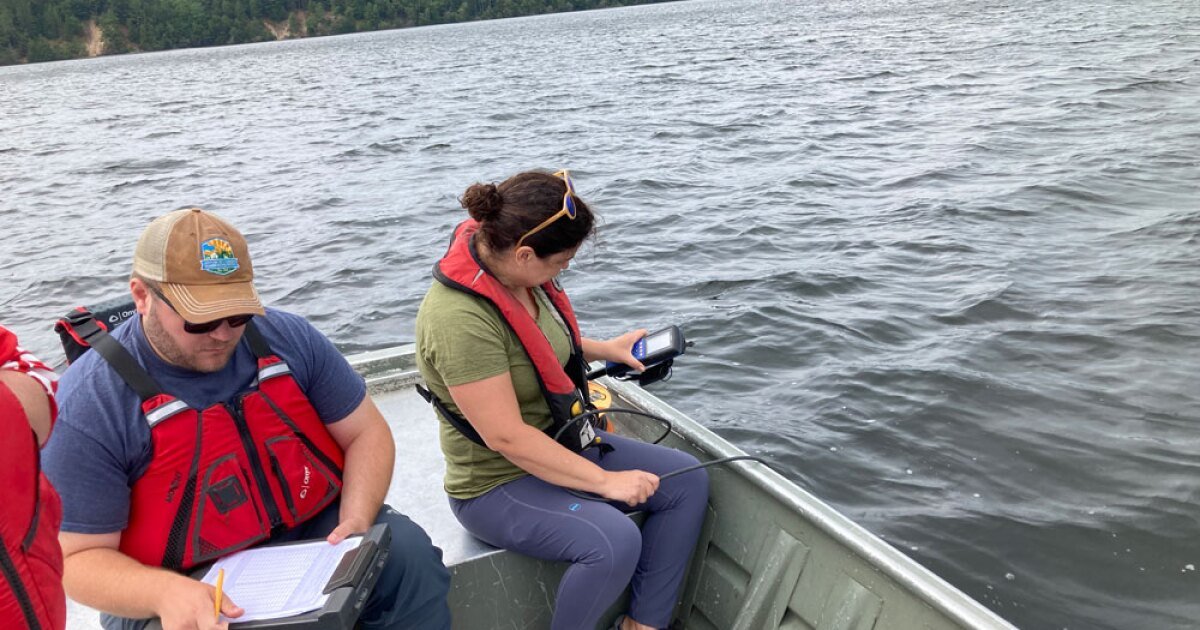
The University of California Trout Lake Research Station in Vilas County is the state’s lake research center.
There are many freshwater lakes in the North Woods.
At the University of Wisconsin Trout Lake Research Station, scientists study topics raised by local communities and issues of national or international interest in the long-term health of the world’s oceans.
This station currently has many projects underway.
Trout Lake Director Gretchen Gerrish described one of the projects she is working with the Wisconsin Department of Natural Resources.
In some lakes, such as Crystal Lake and Sparking Lake, people introduced exotic fish called smelt.
A delicious fish that many people like to fry, it has become established in these lakes over the past 20-30 years.
Trout Lake Station is working to reduce the smelt population.
“For the past few years we have been going to lakes and reintroducing cisco to see if we can bring back the cisco, which is unique to the smelt population, and we are currently in the middle of that research. So they’re looking at transferring a lot of ciscoes and seeing if the smelt numbers will recover if they continue to decline,” Gerrish explained.
She said she is also seeking participants who are willing to meet with graduate student researchers.
The Zaaganan Kinship Project focuses on lakes associated with the Flambeau Lake Tribe, Vilas County, and Oneida County.
“We look at people who have lived in the area for years, moved here recently, or are just visiting the area, and their interactions with the lake are what makes a healthy lake. “We’re looking at how it helps define things like how humans interact with and value the region’s lake systems,” Gerrish explained.
She said the goal of this type of research is to step back and listen to people’s opinions and learn more about what kinds of questions are most relevant to all of the different community members involved in this area. said.
There is space for this research, and the station also has space for other research.
There are concerns that the walleye population is declining in the state.
At Trout Lake, they approach the topic from a different angle. Instead, we’re looking at where walleye are doing best and trying to figure out why that is.
It’s called the “Bright Spots Project.”
This is Gretchen Gerrish.
“Focusing on where they’re succeeding is kind of flipping the script and asking, ‘If we see them succeeding, how can we create that environment?’ ,” Gerrish said.
For the past four years, they have also investigated lake phenology, or how lakes change over time in relation to the seasons.
Ice on and off dates are very dynamic and it has a huge impact on other parts of the ecosystem.
For example, if the ice melts early, disoriented fish will try to spawn.
“And this is something that hasn’t been recorded in our 40 years of time, and this is something that people haven’t really talked about before,” Gerrish explained.
They want to understand the seasonal interactions between food chains.
