

Interesting history of the Parish Sheriff
bobby ardoin
Editor/Contributor
Since the early 1800s. The elected sheriffs who once brought justice on horseback to St. Landry Parish are often embroiled in high-level political intrigue, while others have sometimes suffered brutal deaths at the hands of their opponents. There are also officers, Sheriff Bobby Guidros told an enthusiastic audience Thursday night.
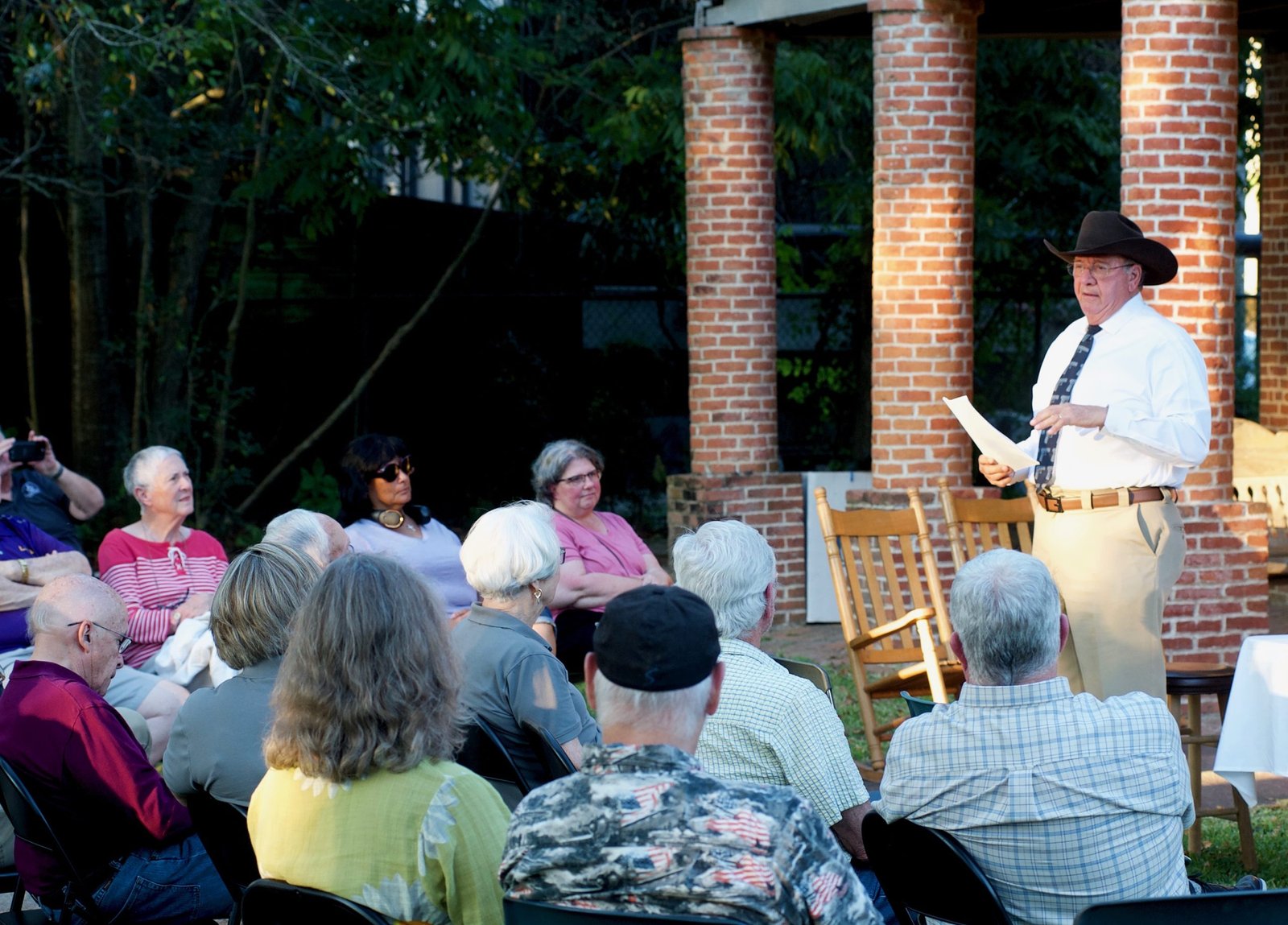
Mr. Guidros, who recently began researching the lives of all the top law enforcement officials in the diocese, spoke during a lecture on the front lawn of the historic Michel Prudhomme House in Opelousas at dusk, revealing a variety of colors that hinted at his predecessor’s colorful administration. He shared many details and anecdotes.
As part of his research, Guidros has located and recorded the burial grounds where many sheriffs have been buried since the early 19th century.
This lecture event, which includes refreshments and social engagement, is the second in a quarterly lecture series sponsored by The Preservationists of St. Landry, Inc., the nonprofit organization that oversees the upkeep of the Prudhomme Home, built in the late 1790s. It was the third time.
Mr. Guidros reminded guests that some sheriff movements in the 1890s became very volatile and sometimes deadly.
haze management bureau
James G. Hayes, owner of the Opelousas Bank and apparently an able parish politician, resigned as a state representative in 1865 and ran for parish sheriff the following year.
However, Hayes was blocked from becoming sheriff by Louisiana Governor Henry Clay Warmoth, who determined that Hayes had not properly filed the required oath with the state.
But that was just the beginning of multiple problems surrounding Hayes’ tragic political career.
Hayes ran for sheriff again in 1870, but a few months before that election, Hayes, probably after a political argument, elected a deputy sheriff who was apparently related to his opponent, former police jury foreman James Thompson. I shot him dead.
Guidros said the death of pro-Thompson councilman Edward Sebastian Mayo on Bellevue Street in Opelousas later had significant political consequences.
Mr Guidros’ investigation revealed Mr Hayes died in office after Theo Evans fired the fatal shot through an open window after the Mayo shootings.
Guidros said Evans was later publicly hanged on the courthouse square in connection with Hayes’ death.
sword is shot
Sheriff Marion Sword was also killed 16 years after being elected in 1900, Guidros recalled.
sword and lieutenant.
A rifle fired by dangerous fugitive Hilaire Carrière in the Malette area fatally wounded Swords and wounded his lieutenant Charles Chacher and several pursuers during an incident involving pursuit of Carrière.
Mr. Guidros said Mr. Swords was seen after his death at his home on the corner of Liberty and Vine streets before he was buried, while Mr. Carrière, who had escaped from Mallet Forest, was found several parishes away. He was captured and taken to the state penitentiary, which was a prison at the time. in Baton Rouge.
Successfully prosecuted and sentenced to death by hanging, Carrière attempts to deceive the executioner by cutting his wrists with a razor blade that his mother secretly introduced into the prison.
That’s when Carriere’s impending death entered a frightening phase, Guidros said.
Guidros said it was still unclear whether Carriere died by hanging or from blood loss caused by the razor blade.
“The prison guards took Carriere to the gallows anyway. Dead or alive, the prison guards seemed determined to hang Carriere,” Guidros said.
Doucet and others
In honor of his surviving family members, Guidros spoke out against Sheriff DJ “Cat” Doucette, who was first elected sheriff in 1936 after a run-off between Simon Stelly and Dudley Briley. , said he would not elaborate on the more colorful incidents.
Doucet won the 1936 election, but then lost the 1944 election to Sterry.
However, eight years later, in 1952, Doucet’s extended government began, and he won the election and served until 1968, when he was defeated by Adler Ledoux.
Guidros praised popular sheriff Howard Zerang, who died in 2005, as a law enforcement officer who began to recognize the need for technology to fight crime.
